“It was just a joke.” “I didn’t mean it that way.” I’ve heard those two sentences many times in my life. But when people make jokes about race, it’s a big deal. It’s always already decided who they are without asking or getting to know them. In those moments, I’m not just another body in the room. I’m something they feel comfortable defining.
It’s not an isolated comment that makes it heavy. It’s the pattern. These incidents add up. They happen in the classroom, in group projects, in leadership roles, and particularly if you are the only minority student in the room. You begin to hold back before speaking, considering every possibility. Will I sound “too sensitive” if I speak up? Will I hold onto it if I don’t?
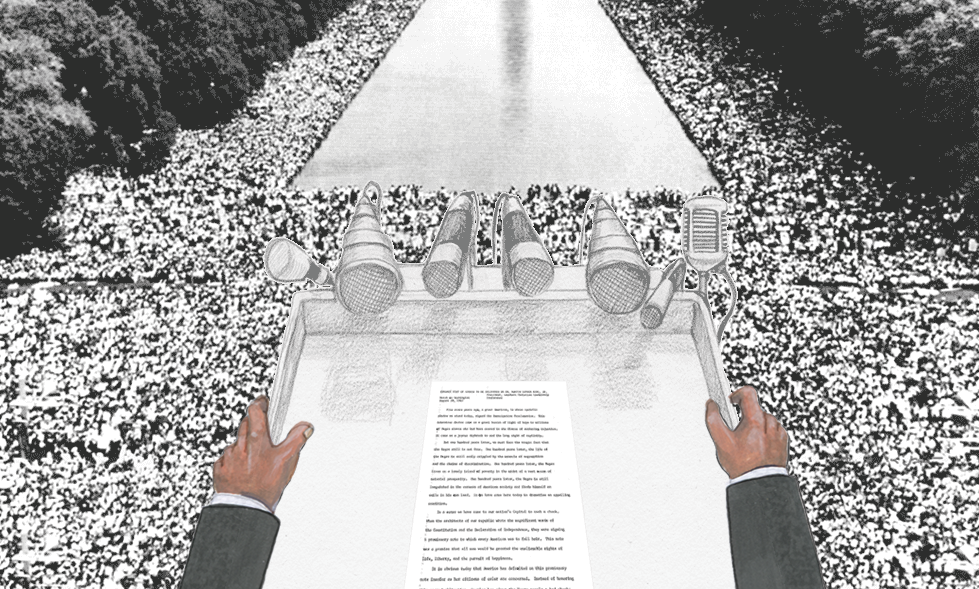
When I think of the I Have a Dream speech, I think of dignity. Dr. King wasn’t just speaking about laws, speeches, and history books. He was talking about the everyday experience of being seen whole and treated that way. Racial jokes may seem trivial compared to the oppression Dr. King spoke out against, but they both come from the same root belief that some people can be reduced to less than what they are.
It is claimed that race-related humor is a sign that one has “moved on.” However, humor only has meaning when it is safe for everyone. When humor relies on stereotypes and historical references relevant to people today, it is not harmless. It is an indicator of progress in documents rather than in reality.
This is the paradox that my generation faces. We are taught about the dream from a young age; we celebrate it, we invoke it, all while existing in a realm where our very identity is the punchline of a joke. We are told that equality is a reality when it comes to rights, yet somehow it is not yet a reality in the real world.
I’ve found that silence does not protect the person being joked about but protects the joke itself. When someone speaks up, even for just a brief moment, the room changes. It brings the dream closer to reality. This isn’t about bitterness. This is about truth. I am proud of who I am, and I do not have to shrink for others. The dream was not to be contained within history. The dream was to inform how we treat one another. Until that happens, the dream is not yet finished.